Oak Island’s Buried Structure Raises New Questions About Who Built It — and Why It Was Meant to Stay Hidden
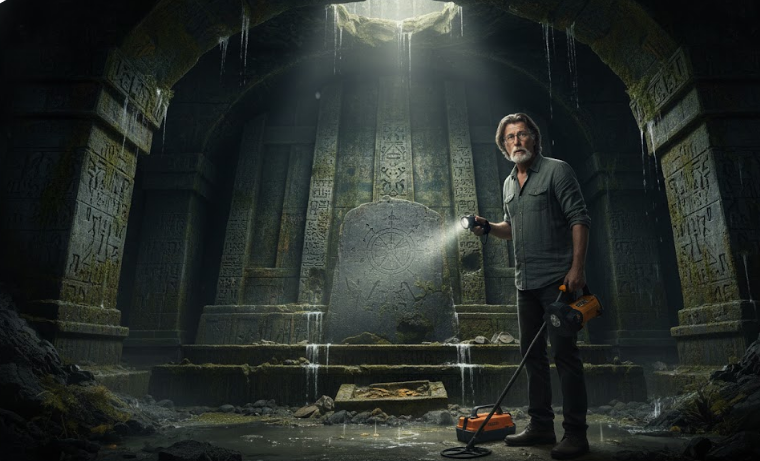
For more than two centuries, Oak Island has resisted every attempt to give up its secrets. Coins, timber fragments, coconut fibre and collapsed shafts have kept hope alive, but none have delivered the kind of certainty that would silence sceptics. Now, according to the team behind The Curse of Oak Island, a discovery made during the 2026 season may finally cross that line.
This time, the find was not a loose artifact or an ambiguous soil reading. It was structure.
Working in an area between Lots 5 and 9 — a stretch of land long considered unremarkable — the team led by Rick Lagina and Marty Lagina uncovered what appears to be a deliberately engineered stone feature buried deep beneath the surface. Its dimensions, symmetry and placement have already prompted experts to conclude that it could not have formed naturally.
Technology Points to Intentional Design
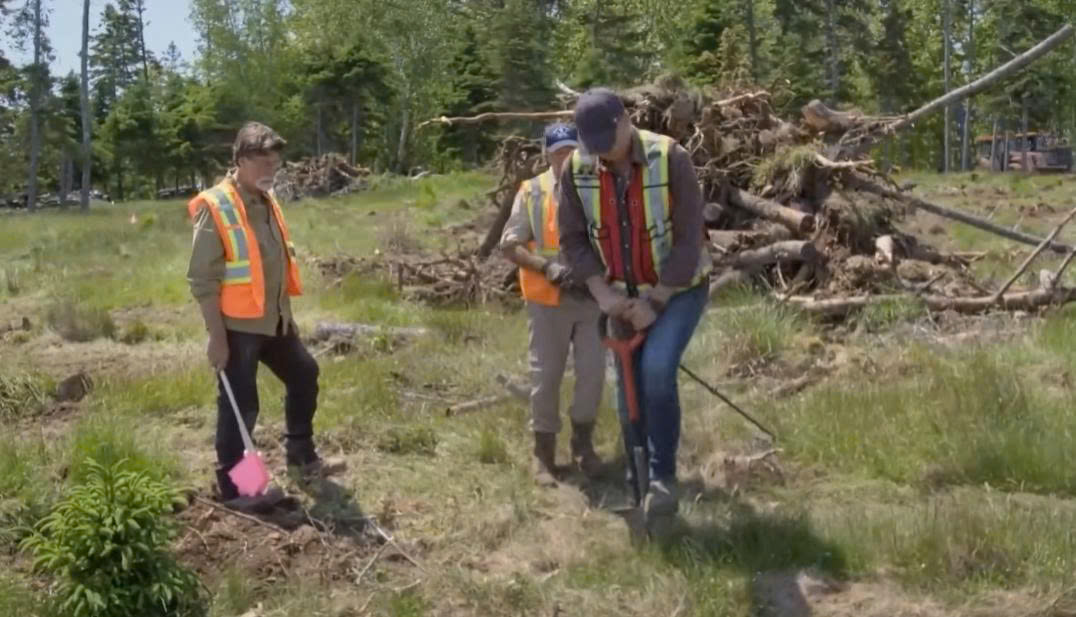
The breakthrough came after a shift in strategy. Frustrated by water intrusion and collapses around the Money Pit area, the team expanded its focus, deploying an unprecedented combination of ground-penetrating radar, lidar scanning, magnetometer surveys and sonic drilling. Each system independently flagged the same anomaly: a long, flat, perfectly straight surface deep underground.
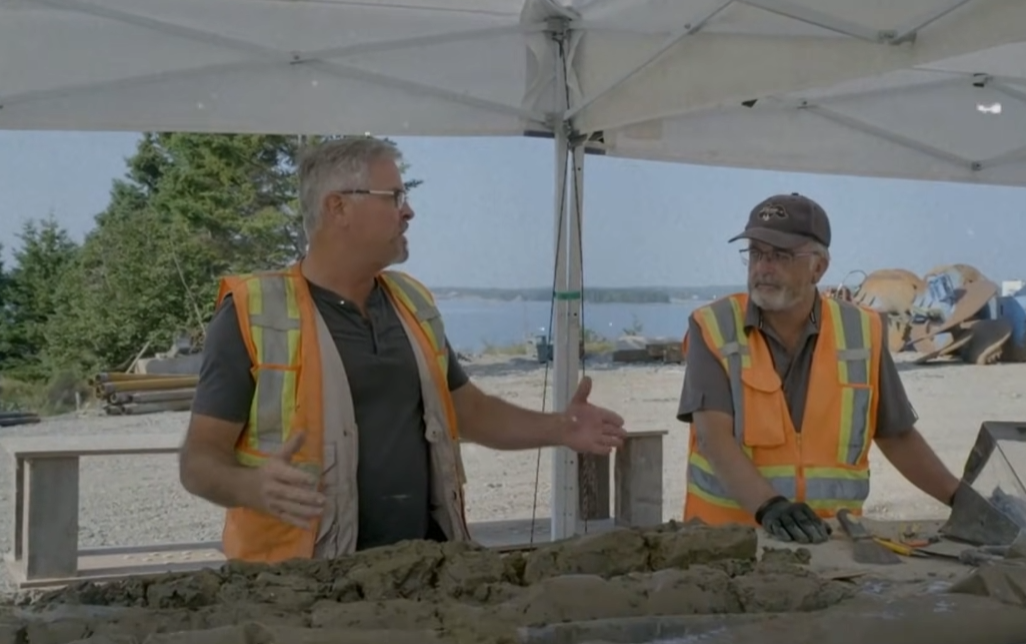
According to project data, the feature showed sharp ninety-degree angles and consistent density, suggesting cut stone rather than bedrock. When excavation began, it was carried out slowly and conservatively, using archaeological techniques rather than heavy machinery.
Within hours, a corner emerged from the soil. Then a wall. Finally, what appeared to be a sealed doorway.
“This is not a suggestion,” Marty Lagina reportedly said on site. “This is construction.”
A Doorway That Changes the Narrative
As soil was carefully removed from the doorway, team members noted something unexpected — a subtle airflow, indicating an open void beyond the stone barrier. All mechanical excavation stopped immediately. Instead, a fibre-optic camera was inserted through a narrow gap.
What appeared on the monitor shifted the tone of the entire operation.
Beyond the opening lay a narrow tunnel, its walls smooth and uniform, supported at intervals by hand-cut wooden beams. The timber style, experts say, aligns with pre-industrial construction techniques. At the far edge of the camera’s reach, the tunnel widened into what looked like a larger chamber.
For the first time, the Oak Island search was no longer chasing clues pointing toward something. It was looking directly into it.
Symbols and Warnings in Stone
As footage was reviewed, analysts noticed carvings etched into the stone surrounding the entrance. Initially dismissed as tool marks, closer inspection revealed repeated symbols — crosses with flared ends, consistent in size and placement.
Historians consulted by the team have noted the resemblance to a cross pattée, a symbol historically associated with medieval religious orders, including groups often mentioned in Oak Island theories. While no definitive attribution has been made, the markings have raised serious questions about whether the structure served not only as a vault, but as a warning.
If so, the implication is unsettling: this space was not designed to be rediscovered.
A Controversial Historical Echo
The discovery has also revived long-standing debate about whether similar features may have been encountered — and concealed — during earlier excavations. In particular, attention has returned to the aggressive digs of the 1960s, when large sections of the island were torn open and reburied.
While no hard evidence proves earlier discoverers reached this structure, the possibility that it was partially exposed and intentionally covered has added a new layer of controversy to Oak Island’s modern history.
For Rick Lagina, the implications are clear. “If this was built,” he said during filming, “then someone wanted to control access. That changes everything.”
What Comes Next
The team now faces its most delicate challenge yet: how to proceed without damaging what lies beyond the doorway. Engineers, archaeologists and conservation specialists are reportedly being consulted to design a safe entry strategy.
Unlike previous seasons, the question is no longer whether something meaningful exists beneath Oak Island — but how far the truth extends, and whether revealing it could rewrite accepted history.
As the tunnel leads deeper into darkness, one conclusion is already unavoidable. Oak Island was not shaped by chance alone. It was engineered — carefully, deliberately, and with a level of foresight that suggests whoever built it understood exactly what they were protecting.
And perhaps more importantly, what they were protecting it from.