Record-Breaking Depth: Rick Lagina Reaches 36 Meters, Uncovers $290 Million Ore Deposit Evidence
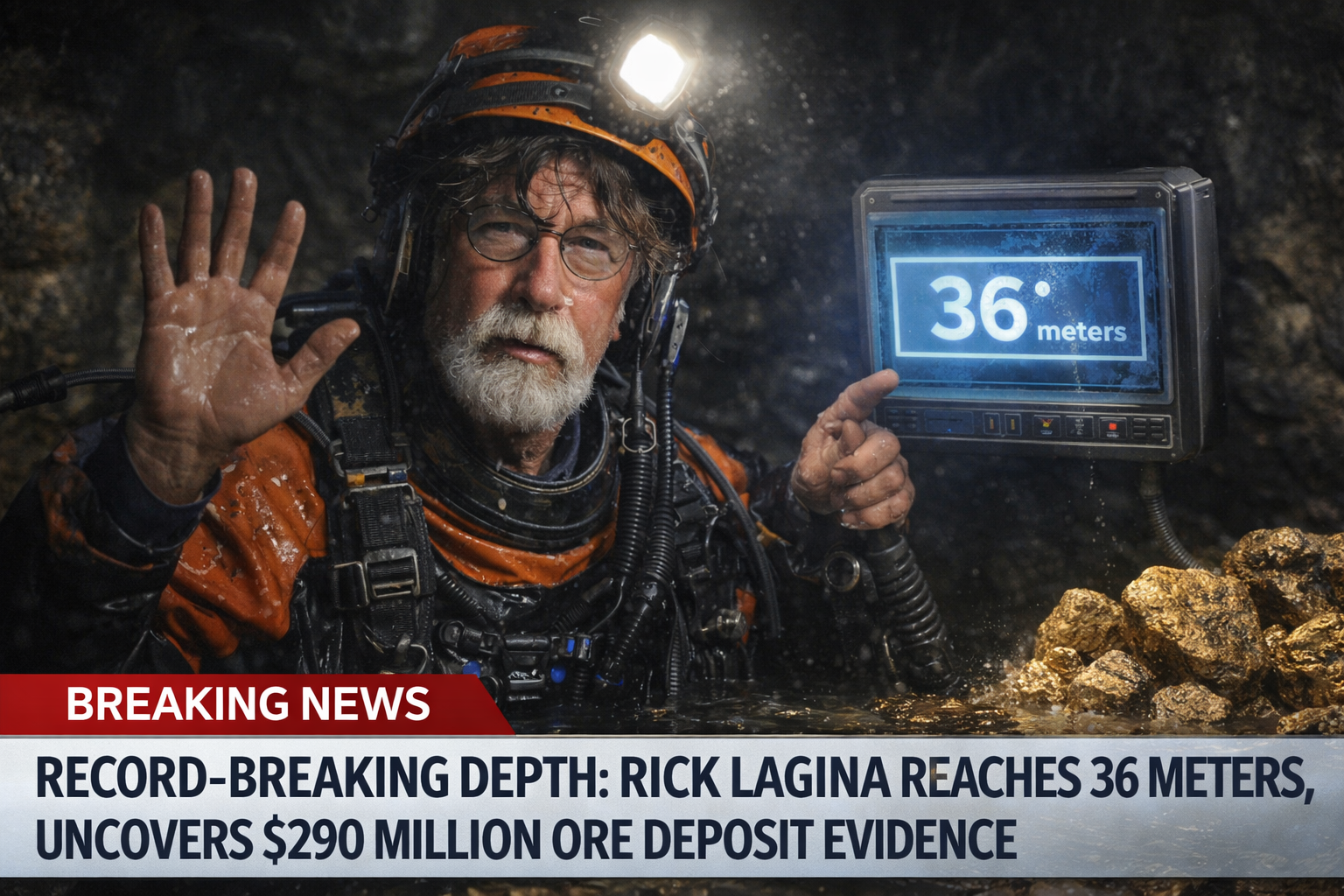
Oak Island, Nova Scotia – In an extraordinary development that could redefine the scope of treasure hunting on Oak Island, Rick Lagina and his team have successfully reached a record depth of 36 meters, uncovering tantalizing evidence suggesting the presence of a multi-million-dollar ore deposit beneath the island. This milestone, achieved through a combination of careful excavation, advanced drilling technology, and meticulous historical analysis, marks one of the most significant breakthroughs in the ongoing saga chronicled by The Curse of Oak Island.
The expedition, spearheaded by Rick Lagina, focused on penetrating the deep sediment layers that have long confounded previous search efforts. These compacted deposits, which extend dozens of meters below the surface, are notoriously difficult to navigate due to the risk of collapse, flooding, and the sheer density of the overlying material. However, after months of strategic planning and deployment of state-of-the-art excavation equipment, the team succeeded in reaching a depth never before achieved in the modern era of Oak Island exploration.
Analysts of the series note that the significance of this achievement extends beyond mere depth. At 36 meters, the team encountered mineral-rich layers indicative of high-value ore, which preliminary estimates suggest could represent deposits worth approximately $290 million. While the exact composition of the ore remains under analysis, early geochemical readings point to a mixture of precious metals that historically would have attracted both colonial and early industrial interest. The potential implications of such a find could reshape our understanding of Oak Island’s economic and strategic history, suggesting that the island may have been a hub for resource extraction long before the legendary Money Pit gained notoriety.
From an analytical standpoint, several key observations emerge. First, the location of the ore beneath thick sediment suggests deliberate concealment or natural deposition over centuries. The stratigraphy indicates a layering pattern consistent with controlled infilling, which may support theories of intentional engineering by past visitors. If these deposits were deliberately buried or shielded, it raises questions about who had the means and motivation to undertake such large-scale underground work. Historically, Oak Island has been linked to privateers, colonial settlers, and speculative treasure seekers, but the scale and sophistication implied by these findings suggest that professional mining or metallurgical operations may have played a role.
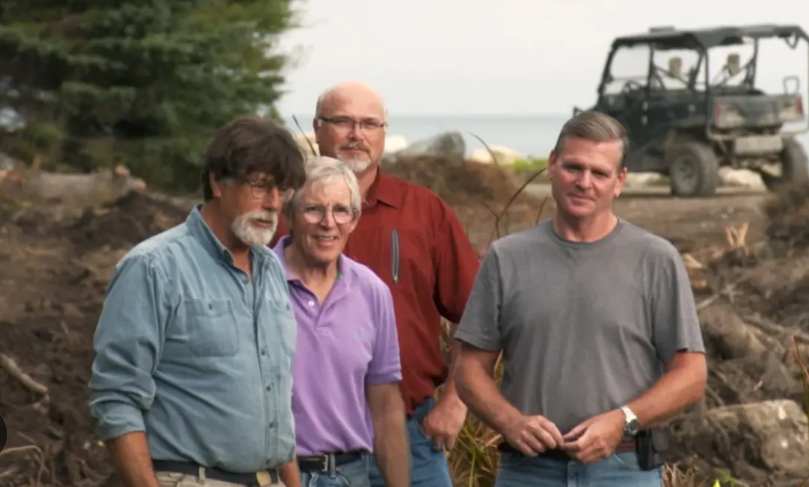
Second, the team’s approach demonstrates the evolving methodology of modern treasure hunting. By combining remote sensing, core sampling, and historical cartographic analysis, the expedition has transformed what was once speculative digging into a structured investigation grounded in empirical data. Analysts emphasize that such a method allows for more targeted exploration, reducing the risk of wasted labor and improving the likelihood of meaningful discoveries. In this case, the decision to penetrate the 36-meter depth reflects a strategic pivot informed by prior seasons’ findings, including the locations of previously unearthed artifacts, sealed chambers, and mineralized soils.
Looking forward, several potential developments can be anticipated. The discovery of ore at such depth may prompt the team to expand their excavation footprint, possibly uncovering additional mineral veins or associated artifacts that could further illuminate Oak Island’s history. Experts predict that if commercial quantities of precious metals are confirmed, the site may attract renewed attention from geologists, historians, and regulatory bodies concerned with mining permits and preservation of the island’s archaeological integrity. This scenario could introduce both logistical challenges and opportunities for collaboration, as stakeholders balance heritage preservation with the allure of economic value.
Moreover, the find may influence the narrative of The Curse of Oak Island itself. For viewers and analysts alike, the discovery reinforces the idea that Oak Island contains layers of historical activity far more complex than the legend of the Money Pit alone. The juxtaposition of high-value ore beneath centuries of sediment provides a tangible connection between natural geology and human enterprise, offering insight into both deliberate engineering and opportunistic extraction practices. Analysts suggest that future episodes may delve deeper into the scientific interpretation of these findings, using laboratory analysis, 3D modeling, and historical parallels to contextualize the discovery.
There is also a symbolic dimension to the breakthrough. Oak Island has long been framed as a site of mystery, where legends of pirate treasure, hidden chests, and coded maps dominate popular imagination. By uncovering evidence of a high-value ore deposit, the Lagina team adds a concrete economic rationale to the island’s history, bridging myth and material reality. This duality enhances the show’s appeal, attracting audiences interested not only in folklore and adventure but also in the analytical, evidence-based approach to historical exploration.
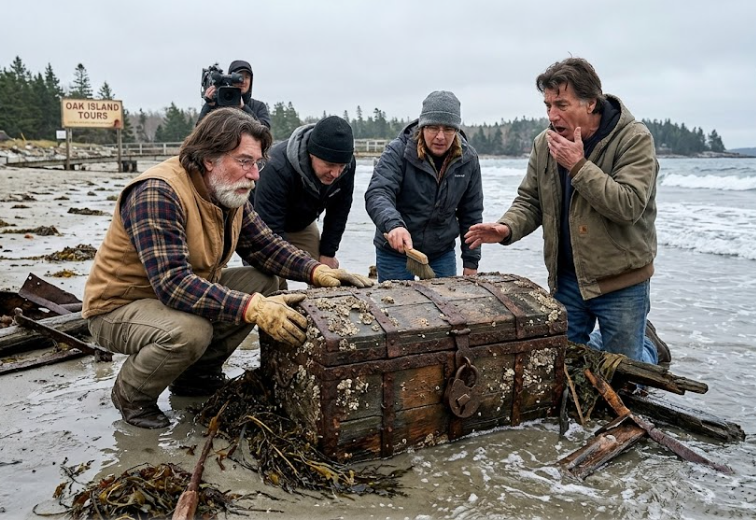
Finally, potential future implications include further partnerships with mining experts and geologists to validate the ore’s composition and assess extraction feasibility. While commercial mining may remain speculative due to regulatory and environmental concerns, the discovery nonetheless elevates Oak Island’s significance as a site of historical and geological interest. Analysts predict that the narrative arc of the show will now increasingly focus on uncovering the full extent of these deposits, alongside the continuing search for the legendary Money Pit.
In conclusion, Rick Lagina’s achievement of reaching 36 meters and uncovering high-value ore evidence represents a landmark moment in the history of Oak Island exploration. From an analytical perspective, the find combines scientific methodology with historical inquiry, potentially redefining both the economic and archaeological understanding of the island. As the team continues to investigate, audiences and experts alike can anticipate new discoveries, interpretive insights, and the ongoing unfolding of a narrative that blends legend, strategy, and empirical exploration in ways that few historical sites in the world can match.