Rick Lagina Just Found Something Mysterious in a Secret Underground Chamber!
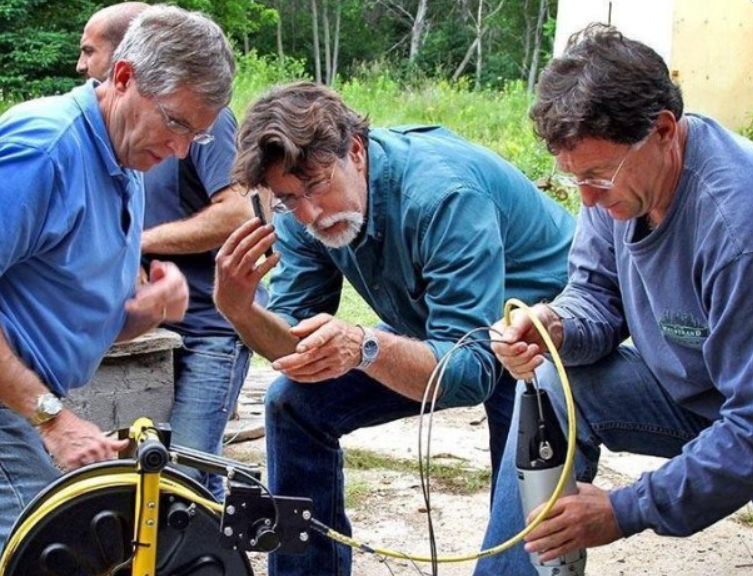
For more than two centuries, a small forested island off the coast of Nova Scotia has obsessed treasure hunters, historians and conspiracy theorists alike. Oak Island, long associated with the infamous “Money Pit,” has been linked to everything from pirate gold and Marie Antoinette’s jewels to the Holy Grail and the Knights Templar.
Now, a new wave of discoveries, scans and bold claims is reigniting the debate — and some researchers insist the island’s greatest mystery may finally be on the verge of being solved.
From Swamp Timbers to Medieval Clues
Recent seasons of The Curse of Oak Island have pushed the investigation far beyond the original Money Pit. Work in and around the triangular swamp on the southern side of the island has produced ship-related artifacts dated between the 15th and 18th centuries, suggesting significant maritime activity long before modern treasure hunters arrived.
In 2020, a piece of ship railing recovered near the swamp’s southern border produced an astonishing result: carbon dating suggested it could be as old as the 8th century. That finding opened the door to theories involving early medieval visitors — including Vikings — and helped fuel geoscientist Dr. Ian Spooner’s view that parts of the island’s landscape may have been engineered centuries ago.
Supporting that idea, the team has identified a possible man-made wooden structure or wall at the edge of the swamp, in the same region where legendary surveyor Fred Nolan once claimed to have found a timber dam. Spooner has noted red sediment at the feature that appears similar to the material beneath the now-famous stone road, hinting that the structures — and perhaps a tunnel system — could be older and more deliberate than previously believed.
The Garden Shaft and a 17th-Century Tunnel
While the swamp continues to deliver clues, the Money Pit area remains the spiritual center of the hunt. Contractors from Dumas have recently extended the historic Garden Shaft to a depth of around 95 feet, where they intersected a mysterious tunnel.

Wood samples recovered from this tunnel and sent for carbon dating produced a stunning result: the material appears to date back to the 1600s, roughly a century before the Money Pit was first reported in 1795. If accurate, this suggests sophisticated underground work on the island long before any known “searchers” began digging.
For Rick and Marty Lagina, who have dedicated years and millions of dollars to the project, the discovery is a watershed moment. If the tunnel predates the shaft itself, it may be an original construction — part of whatever system was built to conceal or protect something of value beneath Oak Island.
Gold in the Wood — and Gold in the Water
Other recent breakthroughs have only heightened the sense that the team is closing in. Drilling in an area known as the “blob” uncovered a void deep underground and core samples of old timber laced with microscopic flecks of gold.
At the Oak Island Interpretive Center, metallurgical analysis by expert Emma Culligan confirmed that the gold was real and embedded deep within the wood fibers, implying that something of significant value had once rested nearby.
At Smith’s Cove, trace gold has even been detected in water and sediments, suggesting that whatever lies hidden may be slowly leaching into surrounding areas. For the team, these findings are more than symbolic: they represent the most tangible evidence yet that treasure — not just legend — may be buried on Oak Island.
Mapping the Underground — and a Templar Pattern
According to recent claims, scientists using advanced ground-penetrating radar have now created the most detailed map yet of Oak Island’s subsurface. Their scans reportedly reveal a vast network of tunnels and chambers far more extensive than anyone imagined.
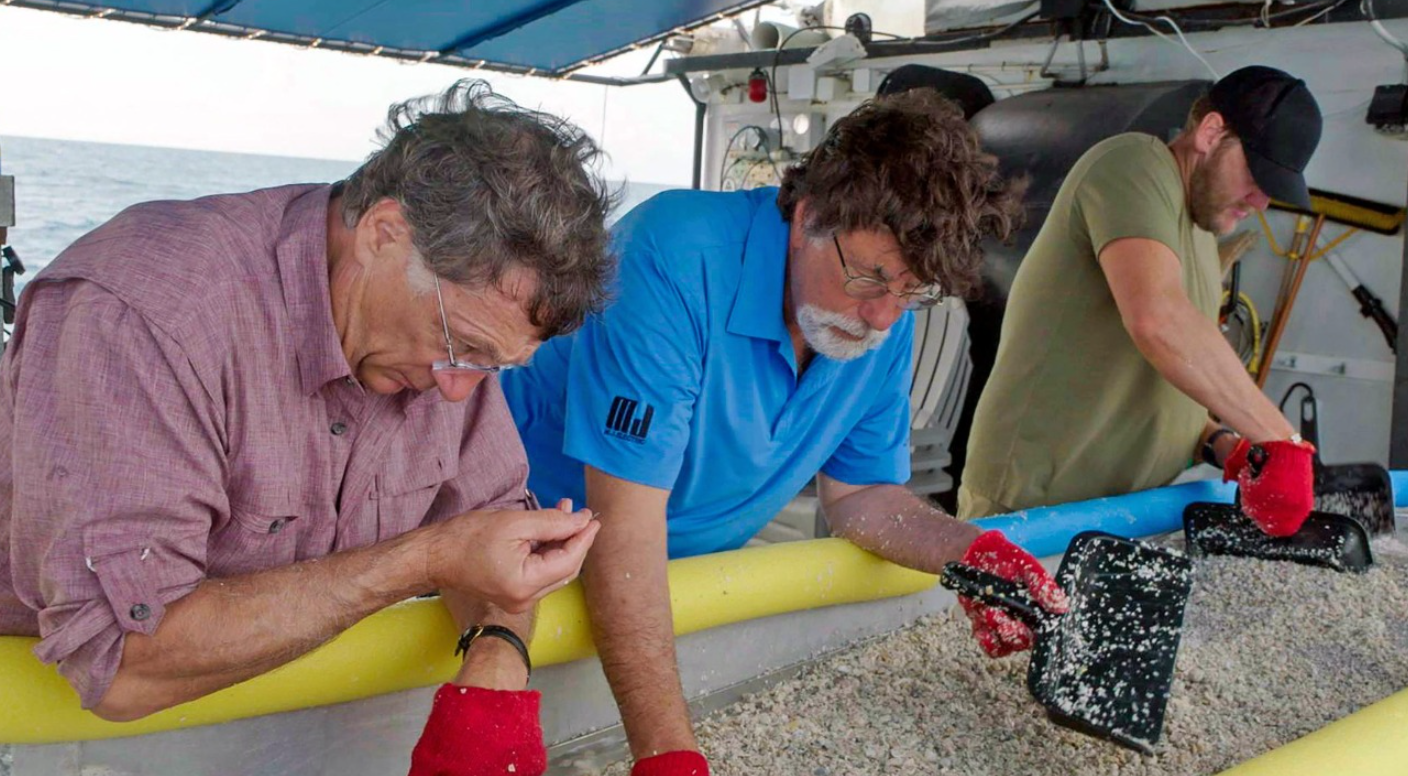
Most startling of all, the arrangement of these voids is said to form a precise geometric pattern that mirrors symbols associated with the medieval Knights Templar. Supporters of the Templar theory argue this could be the long-sought proof that the order — famed for its wealth and secrecy — used Oak Island as a hiding place for sacred or politically sensitive relics.
Adding to the intrigue, one compartment within this network is said to have yielded not gold or jewels, but sealed canisters containing ancient texts written in an unknown language. Researchers are now attempting to decipher the scripts, hoping they may explain who built the tunnels and why.
Artifacts, Legends and an Expanding Mystery
Over the years, the island has produced a steady stream of tantalizing artifacts:
-
A medieval crossbow bolt,
-
A mysterious “Templar” coin,
-
The geometric land feature known as Nolan’s Cross,
-
An ornate keyhole plate,
-
And even a fragment of parchment recovered from deep underground.
Some have linked these finds to Elizabethan writer and statesman Francis Bacon, or even to alternative authorship theories surrounding William Shakespeare. Others point to Samuel Ball — a former enslaved man who became a landowner on Oak Island — as a possible figure in the island’s secret history, based on coins, buttons and weapon fragments found on his former lot.
Yet despite all the speculation, no universally accepted “treasure” has been brought to the surface — at least not yet.
Mystery Not Finished, But Closer Than Ever
For now, talk of the Oak Island mystery being “solved” remains premature. Many of the boldest claims — from Templar vaults to unknown manuscripts — still await independent confirmation.

But there is no denying that the picture is changing. The 17th-century tunnel beneath the Garden Shaft, the gold-bearing wood, the possible man-made works beneath the swamp and the growing web of underground anomalies all suggest that Oak Island is far more than a natural curiosity or a simple searcher’s hole.
Whether the final prize proves to be a vault of treasure, a cache of documents, or a rewritten chapter of Atlantic history, one thing is clear: Oak Island is not finished telling its story. And for Rick and Marty Lagina and their team, the real treasure may be that — after centuries of mystery — the island is finally starting to talk.