Rick Ness Uncovers Historic Gold Pocket, Reshaping the Klondike Mining Landscape
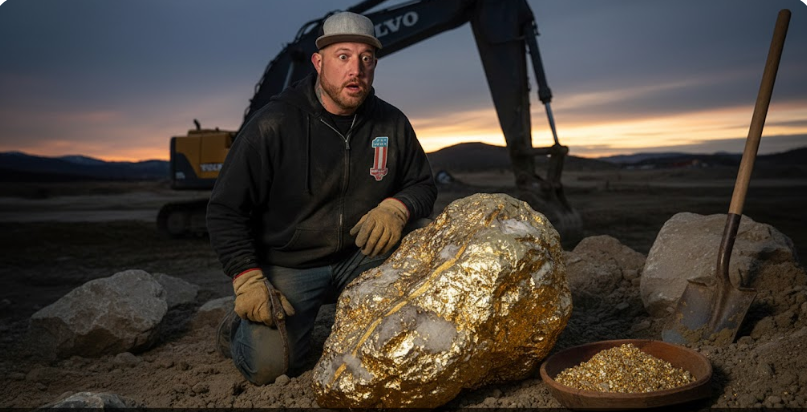
In what industry observers are calling one of the most significant placer discoveries in decades, independent miner Rick Ness has uncovered a high-grade gold pocket linked to a long-abandoned 19th-century claim in the Yukon. Preliminary geological assessments suggest the find could rank among the most valuable in the region in more than half a century.
The discovery was made at the site of the historic Henderson claim, first worked in 1894 and abandoned just three years later. For generations, miners assumed the ground had been exhausted. Ness believed otherwise.
Re-examining the Past
Rather than competing for newly auctioned claims, Ness spent months reviewing archival mining records and survey maps from the Dawson City archives. Among the documents, he found repeated references to a shaft halted at approximately 30 feet due to a dense layer of cemented gravel.
Historical accounts indicated that late-19th-century miners lacked the tools to break through the hardened deposit. Without modern drilling equipment or blasting capabilities suited to that layer, they abandoned the shaft.
“The old records didn’t say the gold disappeared,” Ness said in an interview. “They said they couldn’t get past the cemented layer. That’s very different.”
Using contemporary drilling rigs and heavy equipment, Ness’s crew returned to the original shaft location. Once they penetrated the 30-foot barrier, they encountered a natural bedrock cavity where gold had accumulated in unusually high concentrations.
High-Yield Production
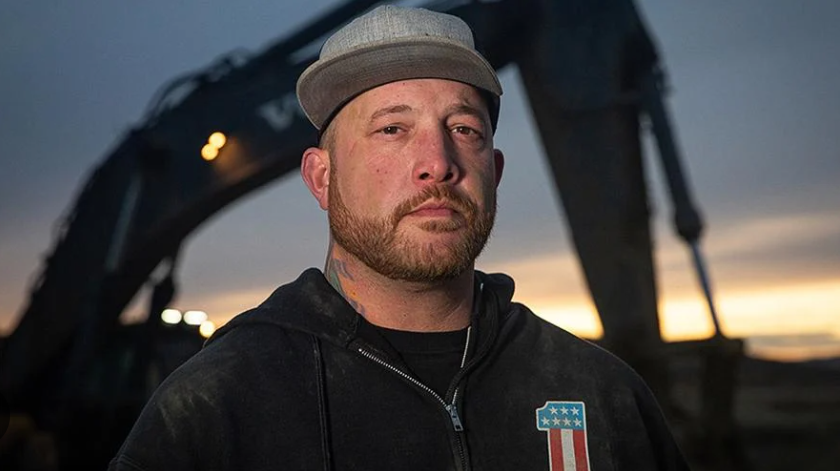
Initial processing results were striking. According to site reports, material extracted from the cavity yielded an average of 12.5 ounces per cubic yard — a density rarely seen in modern placer mining. Peak days reportedly surpassed 800 ounces of recovered gold.
Independent geologists brought in to review samples confirmed the presence of a concentrated placer pocket formed by ancient water flows that trapped heavy gold along fractured bedrock.
What began as a single pocket has since expanded into what geologists describe as a broader “pocket system” — multiple concentration zones connected through ancient bedrock fissures.
Exploratory drilling across adjacent sections of the claim has identified additional high-grade areas. Current reserve estimates indicate approximately 75,000 ounces of recoverable gold within the mapped system.
At current gold prices, the discovery’s in-ground value approaches nine figures. When combined with equipment, infrastructure and operational assets, industry analysts estimate the Ness operation could now be valued at roughly $160 million.
A Shift in Klondike Strategy
The scale of the discovery has prompted renewed discussion throughout the Yukon mining community.
For years, Ness was widely regarded as an underdog in comparison with larger operations. A former foreman for Parker Schnabel, he built his independent venture through incremental growth while managing tight margins and mechanical setbacks.
His approach at Henderson represents a strategic departure from the prevailing model of claim expansion. Rather than acquiring new ground at premium prices, Ness focused on overlooked historical sites.
Veteran miner Tony Beets described the discovery as a lesson in due diligence.
“Most people walked past that shaft assuming it was finished,” Beets said. “Rick went back and checked the facts.”
Schnabel, who visited the site following the announcement, echoed that sentiment, calling the find “a result of research and conviction rather than chance.”
The “Ness Method”
Mining consultants have begun referring informally to the strategy as the “Ness Method” — combining archival research, geological mapping and modern drilling to reassess claims abandoned during the gold rush era.
The Yukon contains hundreds of historical shafts that were halted due to technological limitations rather than confirmed depletion. With advances in drilling, blasting and recovery technology, some of those sites may warrant renewed evaluation.
Industry analysts caution, however, that not every historical shaft conceals a comparable pocket. Geological conditions that create high-grade cavities are rare and highly localized.
Even so, Ness’s discovery has encouraged smaller operators to review archival data more carefully before dismissing ground as exhausted.
Financial and Community Impact
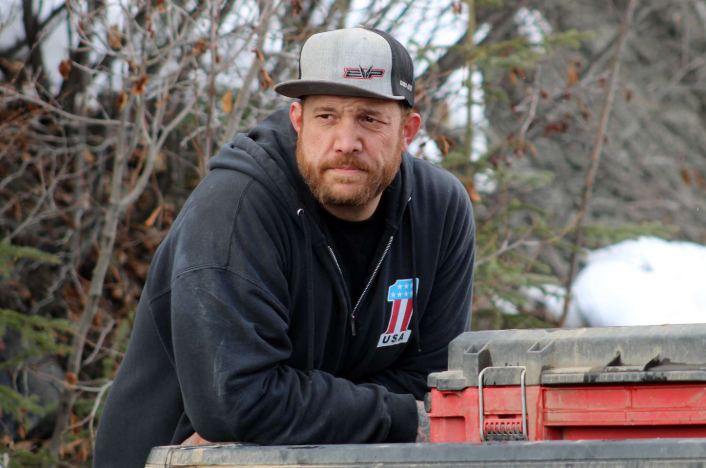
Beyond the immediate production surge, the find is expected to have ripple effects across Dawson City. Increased output typically translates into expanded hiring, equipment procurement and regional service contracts.
Ness has also announced the creation of a mentorship fund aimed at supporting independent miners facing financial hardship. According to a statement released by his office, the fund will provide grants and advisory assistance to operators struggling with equipment breakdowns or exploration financing.
“Mining is risky,” Ness said. “If you’re one mechanical failure away from shutting down, it’s hard to take chances. I’ve been there.”
Preparing for Winter
With the Yukon’s 2026 freeze approaching, operations at Henderson are racing to maximize seasonal recovery while mapping additional zones for next year’s campaign.
Geologists continue to analyze core samples to determine whether the pocket system extends beyond currently proven boundaries. Further drilling will likely refine reserve estimates and inform long-term planning.
For Ness, the discovery represents both validation and transformation. Long viewed as a miner fighting uphill battles, he now oversees one of the region’s most promising placer systems.
In an industry defined by uncertainty, Henderson stands as a reminder that technological progress can unlock ground dismissed by previous generations.
As winter closes in on the Klondike, one thing is clear: the hierarchy of Yukon mining has shifted. Rick Ness is no longer chasing opportunity — he has uncovered it, 30 feet beneath a layer that others once deemed impenetrable.