THE 40,000-POUND GATEWAY: Massive Granite Vault Breached 80 Feet Beneath Oak Island
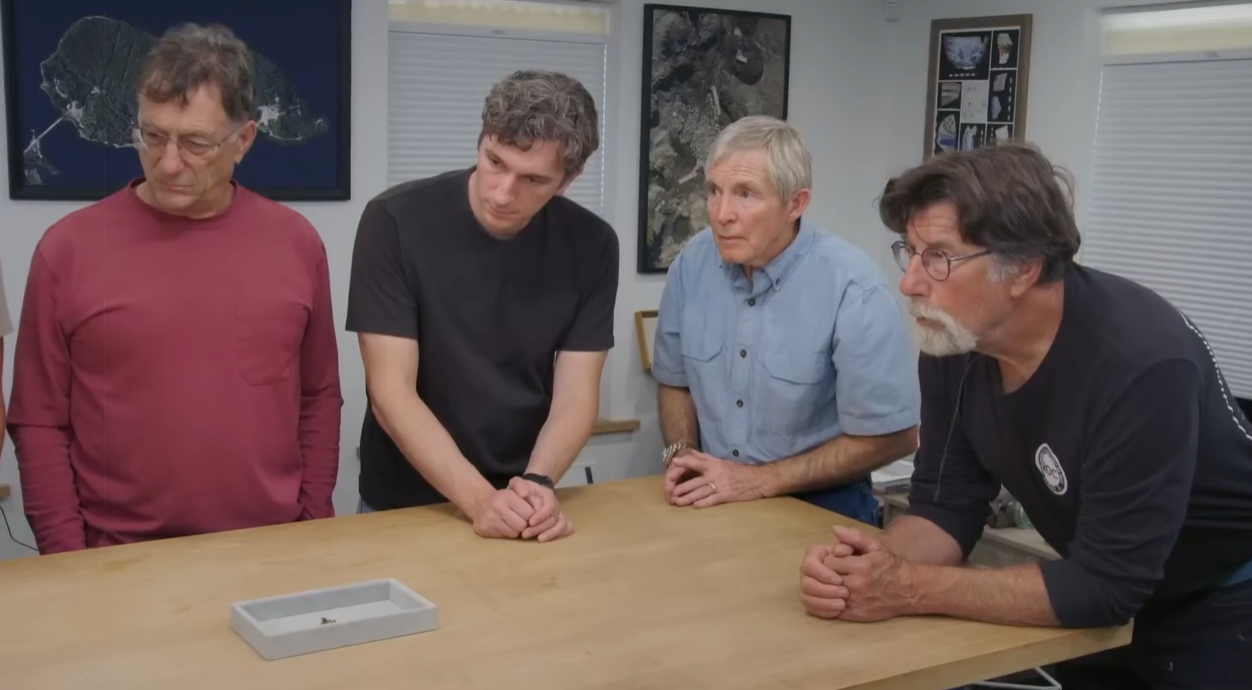
In a season that has already shattered archaeological expectations, the search for the Oak Island treasure has reached a historic climax. Season 13, Episode 19 has culminated in the discovery and visual breach of a massive, 20-by-30-foot granite chamber located 80 feet beneath the island’s swampy eastern edge. The find, characterized by a staggering 40,000-pound structural mass, appears to be the “final vault” that has eluded searchers since 1795.
The Granite Anomalies
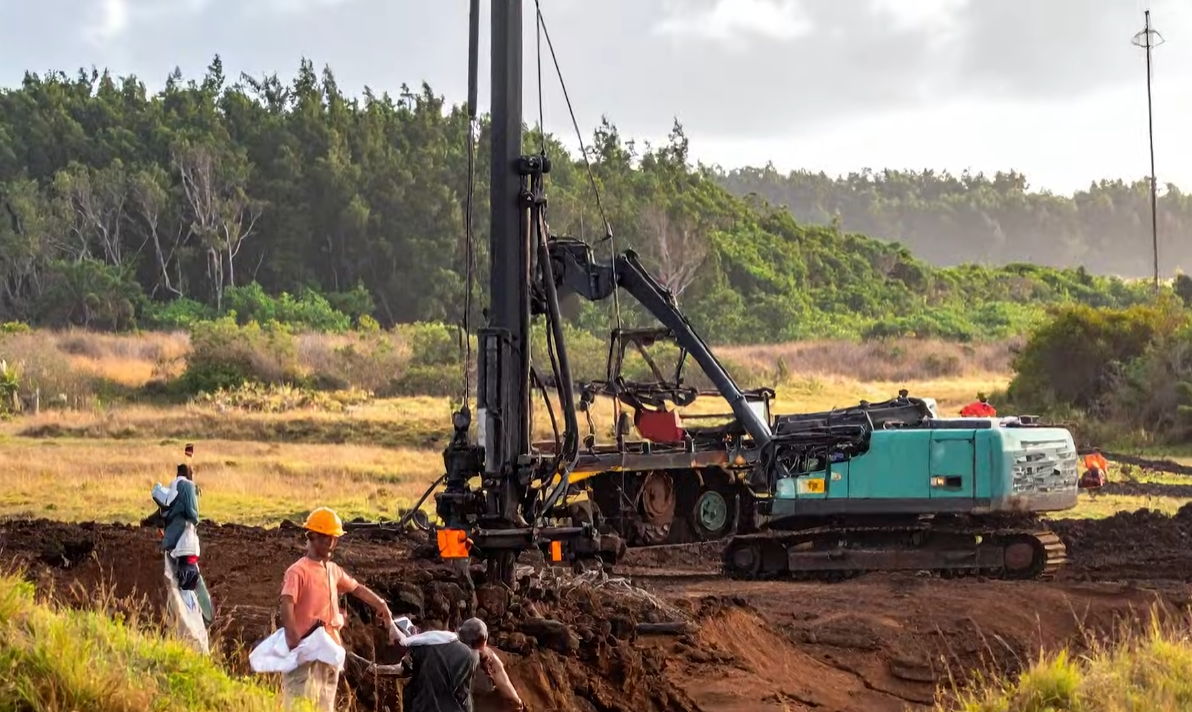
The discovery was triggered by high-resolution sonar scans that identified a hollow, oval space 20 feet ahead of the current dig zone. Diverting from high-impact machinery to precision drilling, the Lagina brothers uncovered a wall composed of smooth granite—a stone not indigenous to Oak Island. Most strikingly, the wall was reinforced with hand-forged iron rivets, placed with a mathematical precision that suggests professional 18th-century or medieval military engineering.
The significance of the location was further bolstered by surface finds. Metal detecting specialist Gary Drayton recovered British coins dating to 1771, while Dr. Spooner identified lead concentrations as high as 140 parts per million in the organic matter surrounding the site. These chemical and physical markers suggest the area served as a heavy-industrial worksite or a high-security transport hub centuries ago.
A Library in the Depths
Unlike the “chests of gold” predicted by local legend, the chamber’s interior reveals a site of immense historical and academic value. Using a flexible fiber-optic camera threaded through a narrow drill hole, the team gained visual access to a 20-by-30-foot dome-topped room.
The chamber is divided into stone alcoves, each containing meticulously organized artifacts:
-
Sealed Scroll Tubes: Wax-sealed cylinders that may contain missing historical records.
-
Iron-Wrapped Boxes: Sturdy containers whose contents remain a mystery pending laboratory stabilization.
-
The Pedestal: A central stone stand supporting a sealed glass case containing a fragile, ancient manuscript.
-
The Ceremonial Cross: An intricate metal object featuring a design that appears Phoenician or North African, potentially predating known European contact with the continent.
The “Living” Trap
The breach was not without peril. As the team touched the granite wall, surface sensors detected a sharp rise in pressure along the southern edge of the dig zone—a sign that an ancient hydraulic countermeasure may have been activated. This “living” trap system, designed to collapse or flood the vault upon unauthorized entry, forced the team to halt all mechanical excavation.

“This isn’t a simple hole,” Rick Lagina noted. “It’s a fortress.” To avoid triggering a catastrophic failure, the team has opted to construct a secondary bypass tunnel to approach the chamber from a reinforced angle, ensuring the preservation of the delicate artifacts within.
A New Chapter for History
With carbon dating placing the tunnel construction in the early 1700s or earlier, the Oak Island mystery has shifted from a “treasure hunt” to an international archaeological recovery operation. The presence of burned symbols on the interior woodwork—circles and woven patterns—has already been sent to European specialists to determine if the site has links to the Knights Templar or Masonic orders.
As the weather in Nova Scotia turns, the team faces a race against time to stabilize the chamber before the autumn rains. The treasure of Oak Island is no longer a myth; it is 40,000 pounds of granite and history, waiting for the final lock to turn.