THE MISSING LINK: 17TH-CENTURY INDUSTRIAL CHAIN UNEARTHED ON LOT 8 REWRITES ISLAND TIMELINE
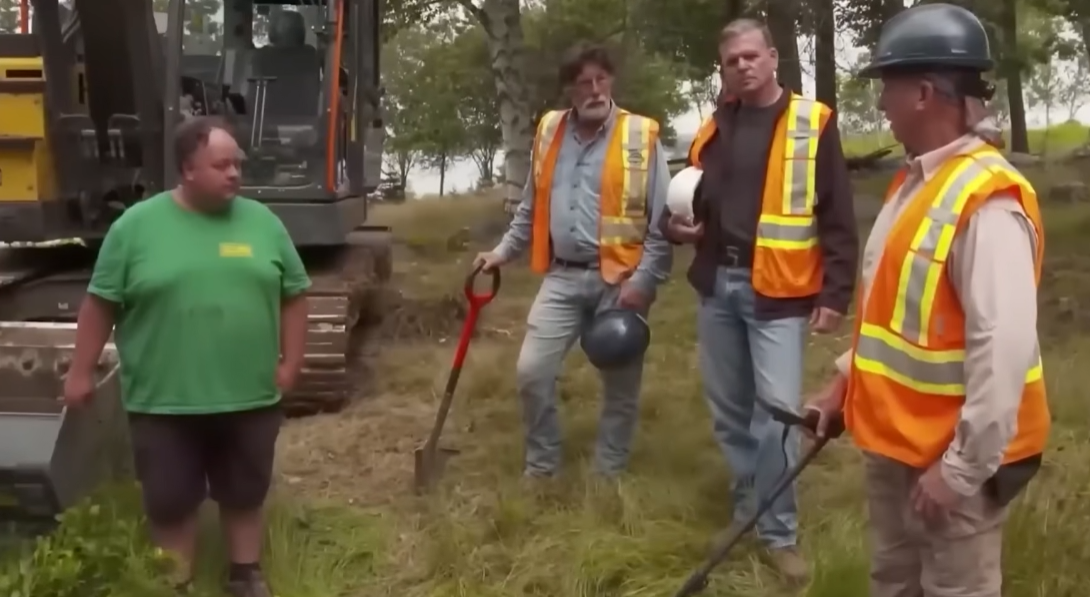
For over two centuries, the mystery of Oak Island has been a trail of breadcrumbs—scattered coins, broken tools, and tantalizing symbols. However, in a Season 13 breakthrough that has stunned the fellowship, metal detection expert Gary Drayton has recovered a “smoking gun” of pre-industrial engineering: a massive, hand-forged iron chain that may finally explain how the island’s legendary structures were built.
The Discovery on Lot 8
The find occurred during a routine sweep of Lot 8, an area increasingly identified as a “hotspot” for organized human activity. Following a deep, resonant signal that Drayton described as “different from the usual trash,” the team excavated a series of thick, oval iron links buried deep within the iron-rich soil.
Unlike modern industrial chains, these links were hand-forged and exhibited a weight and scale far beyond the requirements of simple farming or early colonial settlers. “Chains exist for one reason: to pull, to haul, to move what human hands cannot,” noted the narrator. The discovery of this chain, found only 25 yards from one of the island’s most enigmatic features—a giant boulder resting unnaturally atop a circle of smaller stones—has shifted the team’s focus from “what” is buried to “how” it was hidden.
99% Pure Iron: The Scientific Verdict

To move from speculation to fact, Rick Lagina brought the artifact to the on-site laboratory for a comprehensive analysis by Emma Culligan. The results were nothing short of revolutionary:
-
Composition: Chemical testing revealed the metal is 99% pure iron, a signature of pre-industrial metallurgy that predates mass manufacturing and standardized steel.
-
Workmanship: CT scans showed no machine seams or industrial welds. Instead, the links bore the uneven compression scars and hammer marks of a 17th-century blacksmith.
-
The Date: The chain has been comfortably dated to the 1600s, with a high probability of originating as early as the late 1500s.
Most significantly, Culligan identified “stress-induced wear patterns” on the inner corners of the links. These were not caused by time or rust, but by repeated, extreme tension. “Metal remembers what it has been through,” remarked Scott Barlow, noting that the wear is consistent with dragging objects weighing tens of thousands of pounds.
The “Boulder Lid” Theory
The proximity of the chain to the Lot 8 boulder has given rise to a compelling new theory. Earlier this season, the team discovered a line of heavy ox shoes pointing directly toward this stone. Given that a boulder of that magnitude would require the combined force of multiple oxen and heavy-duty iron tackle to move, the chain serves as the “physical link” between the labor and the landscape.
The fellowship now suspects the boulder is not a natural landmark but a deliberate cap or “lid” positioned to seal an underground shaft. “If something heavy needed to be carefully placed underground, this is the tool you would use,” Rick Lagina observed. The timeline aligns perfectly with the presence of the Knights of Malta and French explorer Isaac de Razilly, suggesting a military-grade logistical operation.
The Missing Link
For the first time in 229 years, multiple artifacts—the musket flintlock, the lead splash, the ox shoes, and now the chain—have locked together into a single, cohesive explanation of intent. The chain proves that a high-resource group committed immense labor to reshape Lot 8 with an engineering precision that suggests they were hiding something meant to stay buried forever.
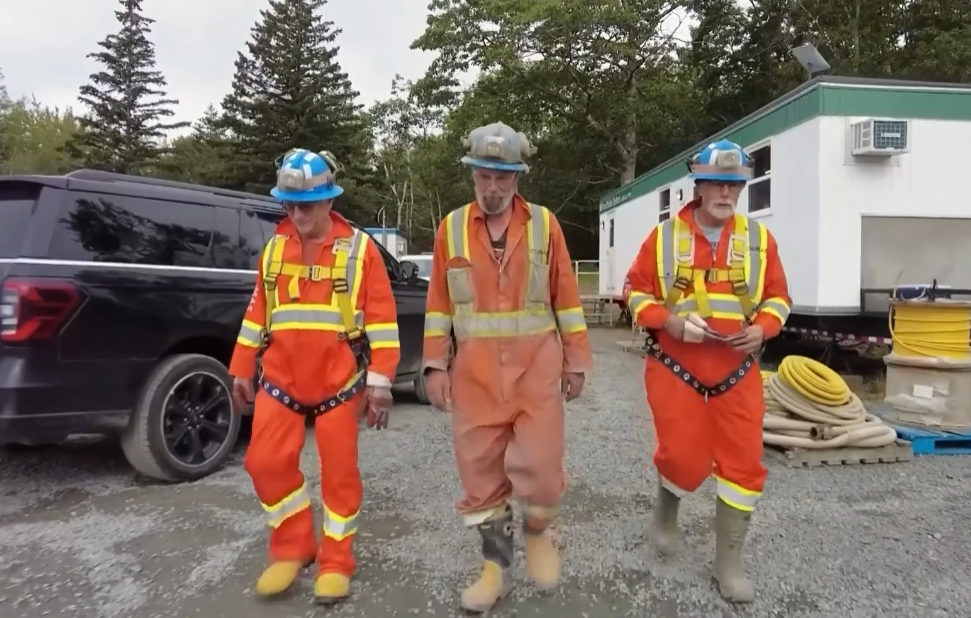
As the team prepares to scan the ground beneath the boulder, the question is no longer if Oak Island holds a secret, but whether the chain they just found will be the tool that finally pulls the truth into the light.