Emma Culligan’s Huge Discovery Unravels the Mystery of the Curse of Oak Island!
For more than a decade, The Curse of Oak Island has built a global audience on mystery, speculation, and the relentless determination of Rick and Marty Lagina. Through storms, pits, tunnels, seismic scans, and centuries of legends, the brothers have pursued what many consider the greatest unsolved treasure mystery in North America. Yet despite their tireless efforts, critics have long argued that the series would end without any truly historic discoveries.

That assumption changed the moment Emma Culligan stepped onto the island.
A New Voice in a Long-running Mystery
After ten seasons on the History Channel, the production began bringing in additional specialists—engineers, historians, and archaeologists—to provide new angles on the mystery. One of the most impactful additions was Emma Culligan, a metallurgist, engineer, and archaeologist with a unique background and a sharp analytical mind.
Culligan, who grew up in Japan and spoke Japanese before she learned English at age 15, studied at Memorial University in Newfoundland. Despite her youth, she arrived with extensive experience in artifact analysis, including CT scanning, elemental testing, and carbon dating—skills that immediately changed the pace of Oak Island research.
But what fans didn’t know at first was that Culligan had initially been skeptical of the show. In an appearance on The Curse of Oak Island and Beyond podcast, she admitted that she assumed the whole thing was a dramatized treasure hunt. “I honestly thought they wanted me as a personal assistant,” she joked. It wasn’t until she arrived on site that she realized the team needed her expertise—not her coffee-running skills.
The Roman Coin That Shook Season 12
Her biggest contribution came early in Season 12, Episode 2. A weathered coin found on Lot 5—originally just a curiosity—became one of Oak Island’s most significant discoveries after Culligan’s detailed laboratory analysis.
Using alloy testing, she revealed that the coin was composed of an unusual mix: 70% copper and 16% lead. This composition didn’t match typical British, French, or colonial-era coins known to circulate in early North America. Instead, Culligan proposed a startling theory: the artifact most closely resembled Roman coins minted between 200 and 300 AD.
The implications were staggering.
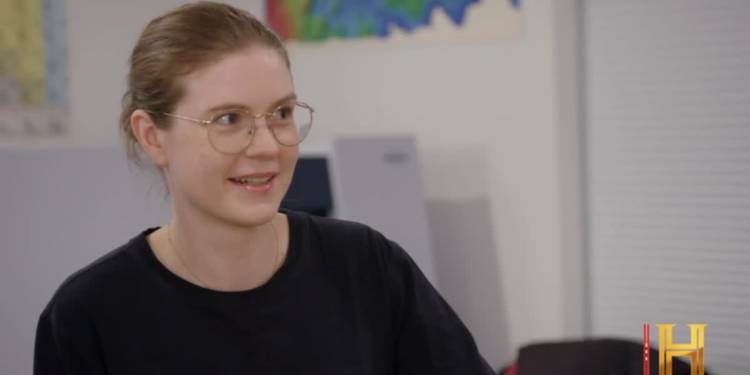
Roman contact with North America has never been historically documented. Yet if the alloy and dating were accurate, this isolated coin could indicate ancient trade routes, shipwrecks, or trans-Atlantic interactions that pre-date Viking arrival by centuries. More importantly for Rick, Marty, and the team, its presence suggested that Oak Island once held value far older—and far stranger—than previously imagined.
Geologist Jack Begley called the find “a paradigm shift.” Even veteran treasure hunter Gary Drayton simply shook his head and declared it “a mind-blower.”
Changing How the Team Handles Gold
Culligan’s impact didn’t stop with the Roman coin. According to researcher Larivan, she soon made another breakthrough that left the team stunned. While examining a piece of wood, Culligan detected traces of gold residue embedded in the grain. Her reaction, he said on the podcast, was an unfiltered “holy ****.”
It was the kind of discovery that forces treasure hunters to rethink everything—from the island’s trade history to who might have transported precious metals there centuries ago.
Larivan noted that Culligan’s presence has fundamentally changed the team’s approach:
“She has changed how people treat gold on the digs.”
Her analyses now guide excavation strategies, artifact handling protocols, and even where the team chooses to focus its high-tech searches.
A Rising Star in the Oak Island Story
Culligan’s technical skill and calm on-camera presence have made her an unexpected fan favorite. Viewers appreciate her clarity, her methodical approach, and her ability to translate complex scientific data into discoveries that reshape the Oak Island narrative.
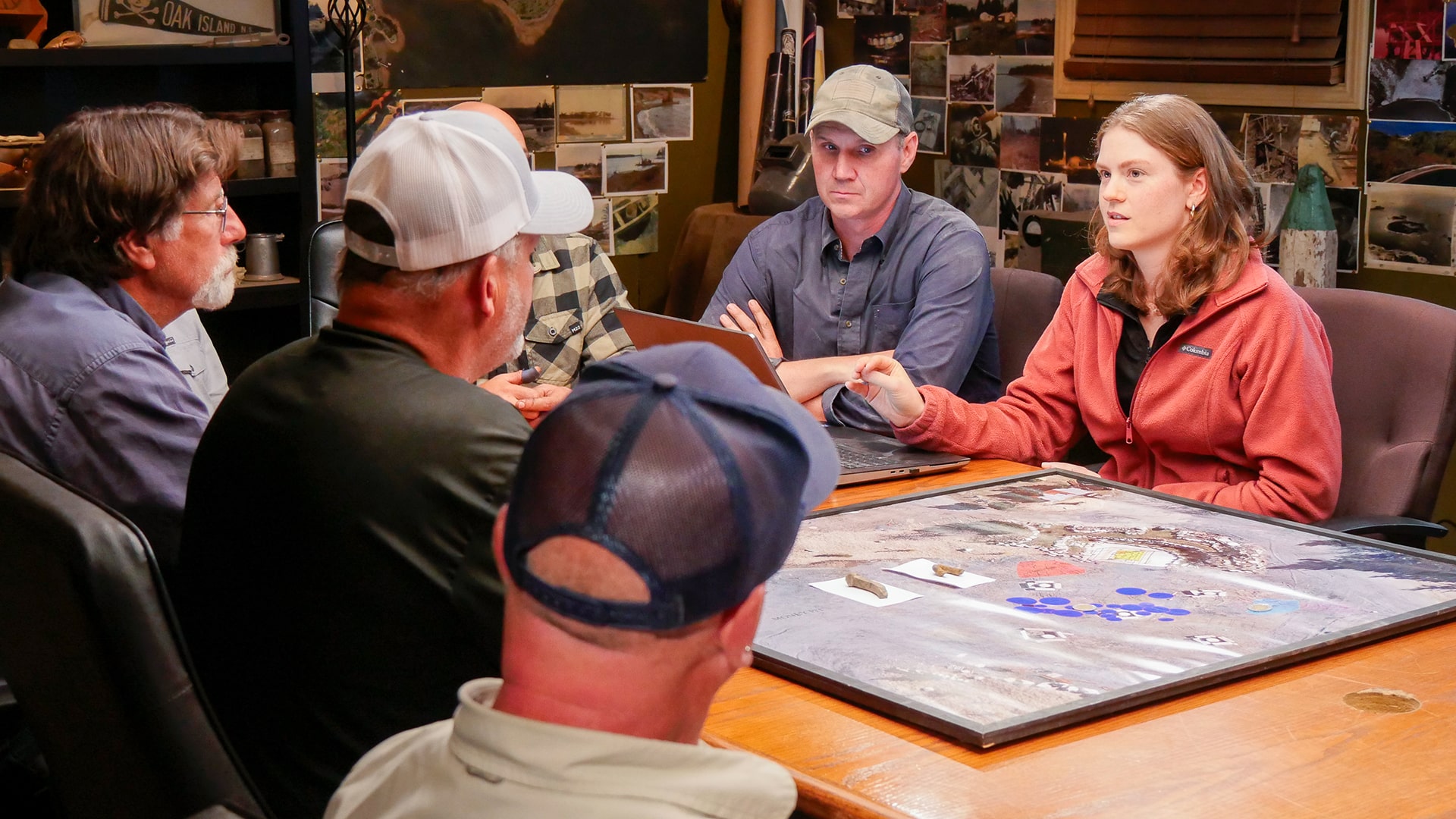
She represents a new phase of the show—where science and advanced technology blend with folklore and history to create breakthroughs that would have been impossible a decade ago.
While the Lagina brothers have always embraced expert involvement, Culligan’s contributions stand out because they address the biggest criticism of the series: a lack of hard evidence. The Roman coin, the gold residue, and her ongoing metallurgical tests have collectively strengthened the case that something extraordinary once happened on Oak Island.
Is This the Turning Point Fans Have Been Waiting For?
For years, skeptics claimed the series would end without answers. But with Emma Culligan on the island, that confidence has begun to crack. Her discoveries—scientific, verifiable, and historically disruptive—suggest that Oak Island may indeed hold secrets older and richer than anyone expected.
And if the past is any indicator, Culligan is just getting started.
Because on an island built on mystery, sometimes all it takes is the right scientist at the right moment to change history.